Most people hear "grease trap" and think restaurant. Plenty of other kitchens have one too, and some of them haven't been opened in longer than anyone can remember. A neglected trap doesn't announce itself until a floor drain backs up during a lunch rush or a church supper. Regular service keeps that from happening.
Not just restaurants
If a building in or around Kannapolis cooks food for a crowd, there's a good chance it has a grease trap or a larger grease interceptor:
- Restaurants, diners and takeout spots
- Church fellowship hall kitchens
- School and daycare cafeterias
- Assisted living and nursing home kitchens
- Bakeries, butcher counters and grocery delis
- Event spaces with a catering kitchen
Smaller kitchens often have a compact trap indoors near the sinks. Busier ones usually have a big in-ground interceptor outside with lids at the surface, which needs a vacuum truck. The local sewer utility or inspector decides what a building must have and how it has to be kept up, so check with them for the rules that apply to you.
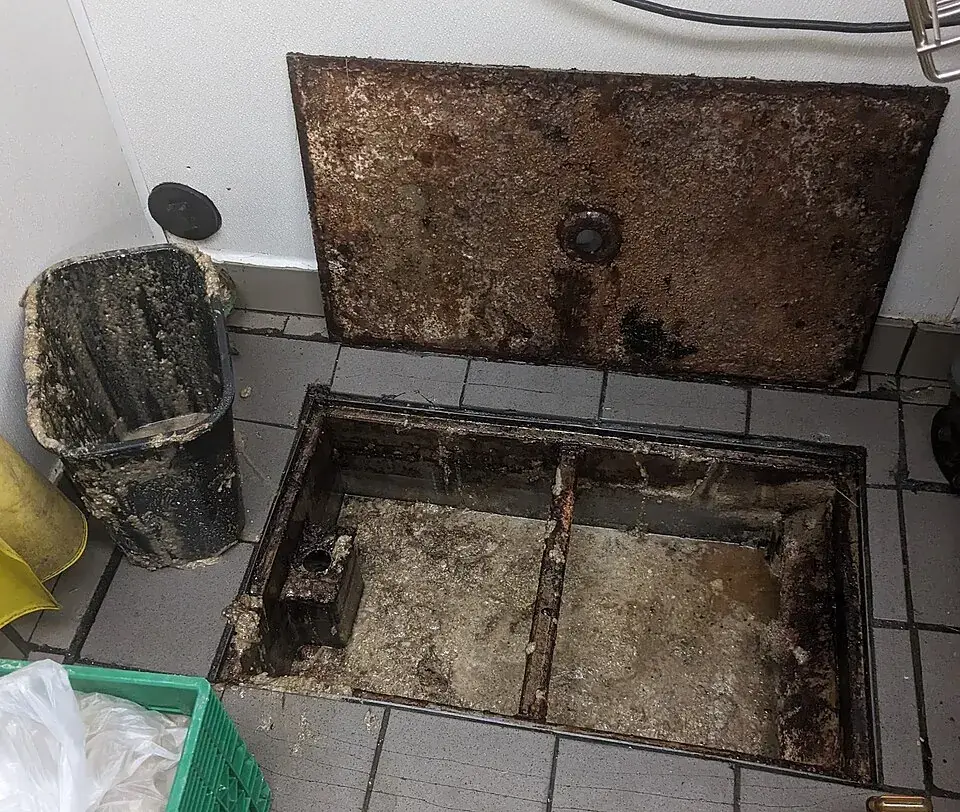
Pumped out, not skimmed
This is the most important thing to know about grease trap service: skimming the top isn't the same as cleaning the trap.
A trap separates wastewater into three layers. Grease floats on top. Food solids sink to the bottom. Clearer water sits in the middle and flows out. A quick skim takes off some of the top layer and leaves the bottom sludge behind. Over time that sludge builds up, the trap has less room to work, and grease starts flowing straight through.
Good service means:
- The layers are measured before pumping, so the schedule can be adjusted
- The whole trap is pumped down, top to bottom
- Caked grease on the walls and baffles is scraped loose and removed
If a past provider only ever skimmed, expect the first full cleaning to take longer than usual.
A look inside every time
An open trap is a chance to check its condition. Grease breaks down into acids and gases that are hard on concrete and metal over the years. A technician should look at:
- Inlet and outlet tees or baffles. If one is broken or missing, grease bypasses the trap.
- Walls and openings. Crumbling concrete or rusted parts point to repairs ahead.
- Lids and gaskets. Outdoor lids should fit tight, sit level and be safe to walk near.
- Flow. Water should leave freely. A slow outlet can mean grease is building up in the line downstream.
Problems found here get quoted as repairs, separate from routine service. It's the same idea as septic repairs on a home system: fix the broken part before it causes a bigger mess.
Keeping the paperwork
Inspectors and utilities often ask food businesses to show when their trap was serviced. Even if nobody has asked you yet, keep a simple log:
- Date of each service
- Who did it
- How much was pumped
- Condition notes and any recommended repairs
A reputable service leaves a record after each visit. Keep them together, on paper or in a folder on the office computer, where a manager can pull them up during an inspection.
Fitting service around kitchen hours
Nobody wants a pump truck in the parking lot at noon on a Friday. Many grease trap services work early mornings, late evenings or on days you're closed. Indoor traps take less time than outdoor interceptors, but either way the sinks and dish machine that drain into the trap should stay off while it's being pumped. Set a recurring day and time so it stops being something someone has to remember.
When the kitchen changes, the schedule changes
A schedule that worked last year might not work now. Recheck it when:
- The menu adds more fried or grilled food
- Hours get longer or you add a meal service
- A new dish machine goes in
- You start catering or hosting larger events
The simplest way to find the right interval is to have the technician measure the grease and solids layers over a few visits, then pump before they get too deep.
Kitchens on septic
Some churches, event venues and small food businesses outside the sewer area around Kannapolis, Mount Pleasant and Rockwell run on septic. In those buildings, grease that gets past the trap goes into the septic tank and then the drain field, where it can seal off red clay soil for good. Keep the grease trap and the septic tank on coordinated schedules, and see septic pumping for the tank side. A field that's already struggling is covered on our drain field replacement page.
What it costs
The price depends on trap size, how full it is, how often it's serviced, how far the truck has to reach and whether the visit is after hours. Regular service generally costs less than an emergency call to an overflowing trap. Our septic prices page explains how pumping work is priced, and you get a written quote before service starts. Call (980) 499-7358 to set up a first visit.
Questions people ask
Is a grease trap the same as a septic tank?
No. Both are tanks that separate layers, but a grease trap is sized to catch fats and food solids from a kitchen before they reach the sewer or septic system. A septic tank handles all of a building's wastewater. A building on septic with a commercial kitchen usually has both.
Our trap smells even right after it's pumped. Why?
The odor can come from grease left caked on the walls, a downstream line that's coated with grease, or a lid or gasket that doesn't seal. Ask the technician to check those on the next visit.
Can we pour used fryer oil into the grease trap?
No. Used fryer oil is normally collected in a separate container and picked up by a recycler. Pouring it into a drain overloads the trap and pushes grease further down the line.
Does someone need to be there during service?
Usually someone needs to unlock the building or point out the trap, especially for indoor units. Many kitchens book a standing early-morning time when a manager is already on site.